Pearson Edexcel · GCSE · English Literature
Poetry since 1789 – Pearson Poetry Anthology (choice of collection: Relationships, Conflict, Time and Place, Belonging)
Master the Edexcel GCSE English Literature Poetry Anthology with this comprehensive guide. Learn how to compare poems effectively, analyse language and structure like a senior examiner, and tackle unseen poetry with confidence.
- 4 min read
- 2 worked examples
- 2 practice questions
- 8 key terms
Study Notes
Overview
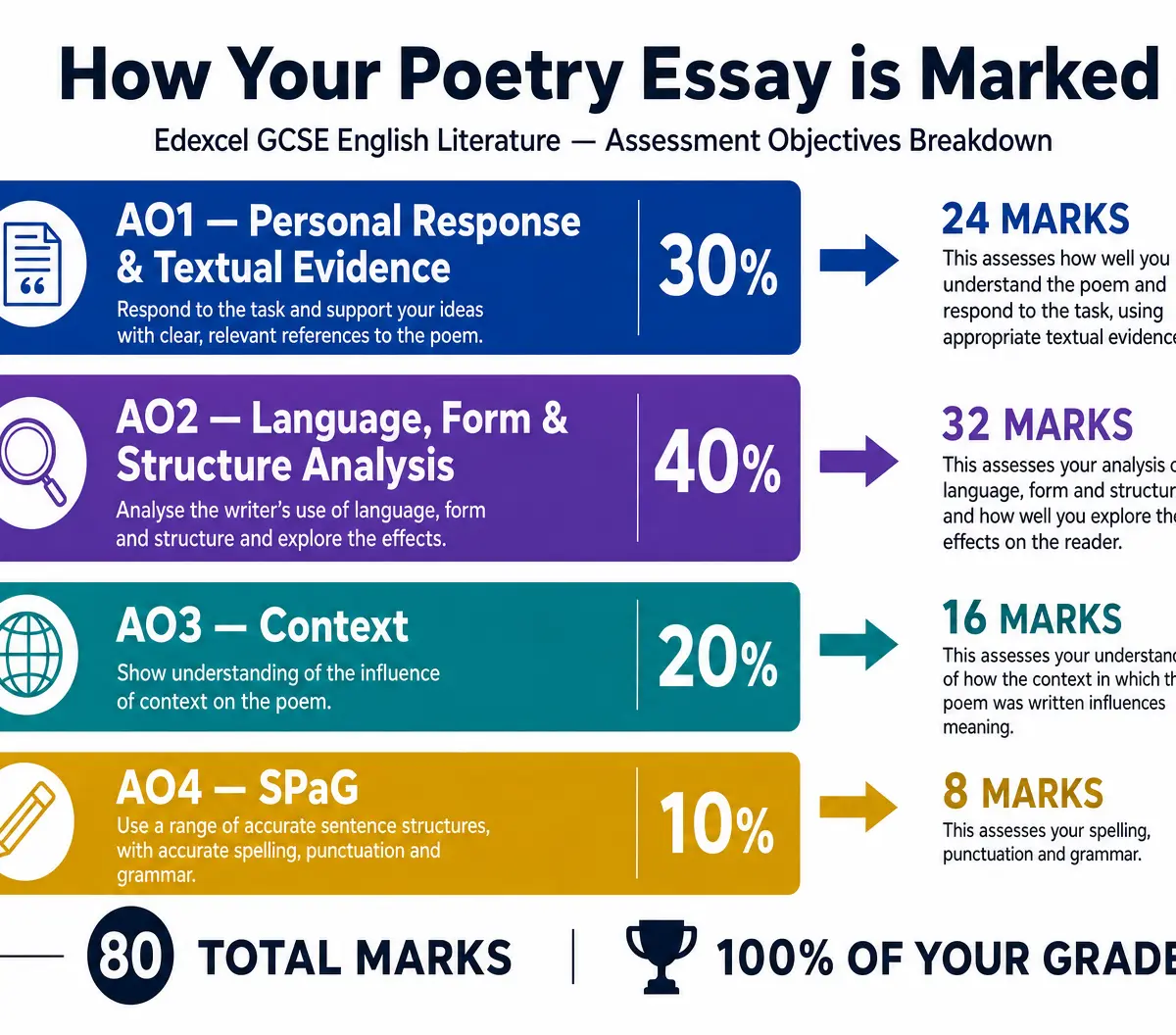
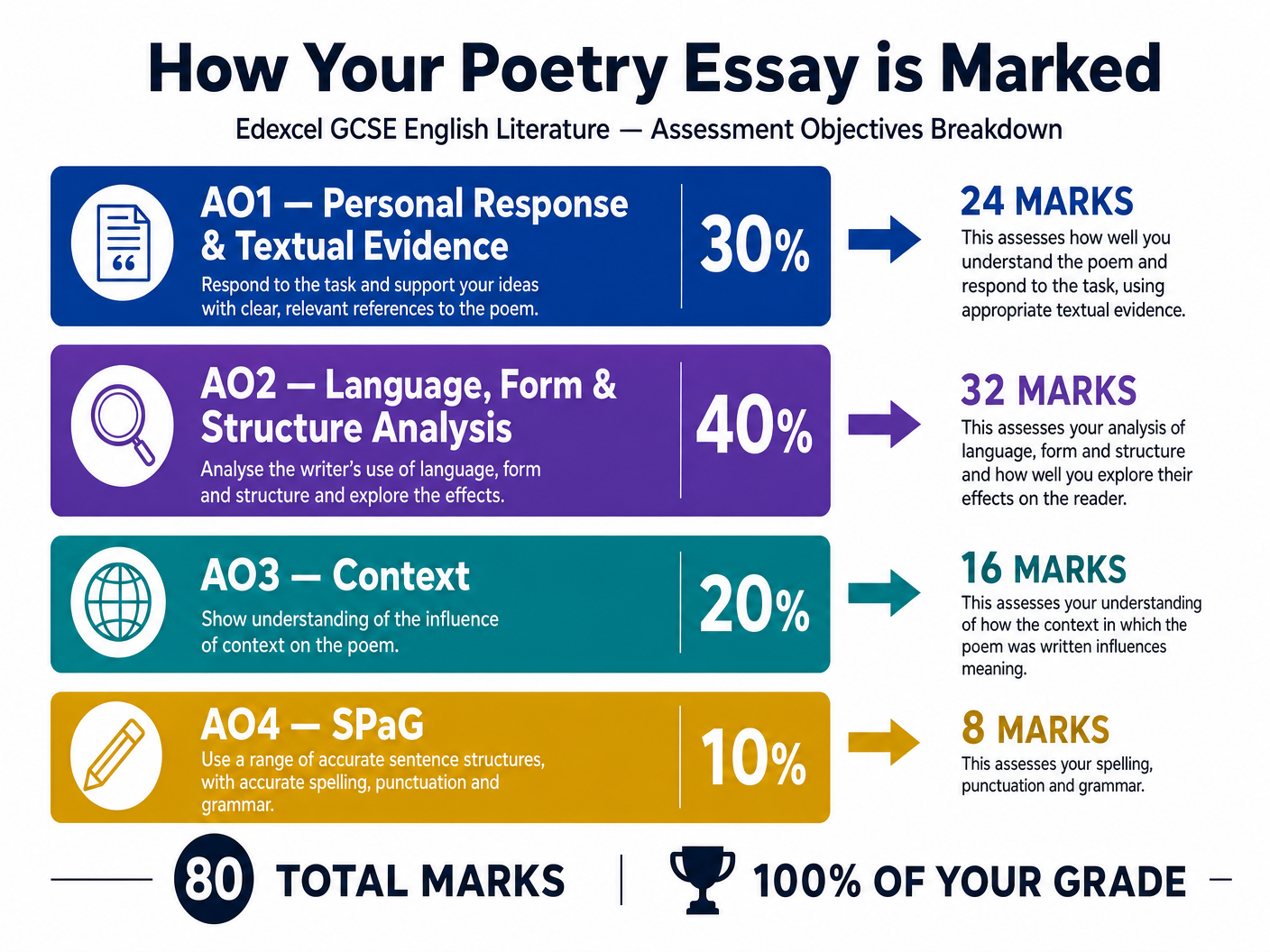
Component 2, Section B of the Edexcel GCSE English Literature specification requires candidates to study one of four poetry collections (Relationships, Conflict, Time and Place, or Belonging) from the Pearson Poetry Anthology. This section assesses your ability to critically analyse how poets use language, form, and structure to create meaning (AO2), your understanding of how context influences poetry (AO3), and your ability to maintain a developed, comparative personal response (AO1). Examiners consistently reward candidates who integrate their analysis rather than 'feature-spotting', and those who draw thoughtful, conceptual links between poems.

Understanding the Tasks
The poetry section is divided into two 30-mark tasks:
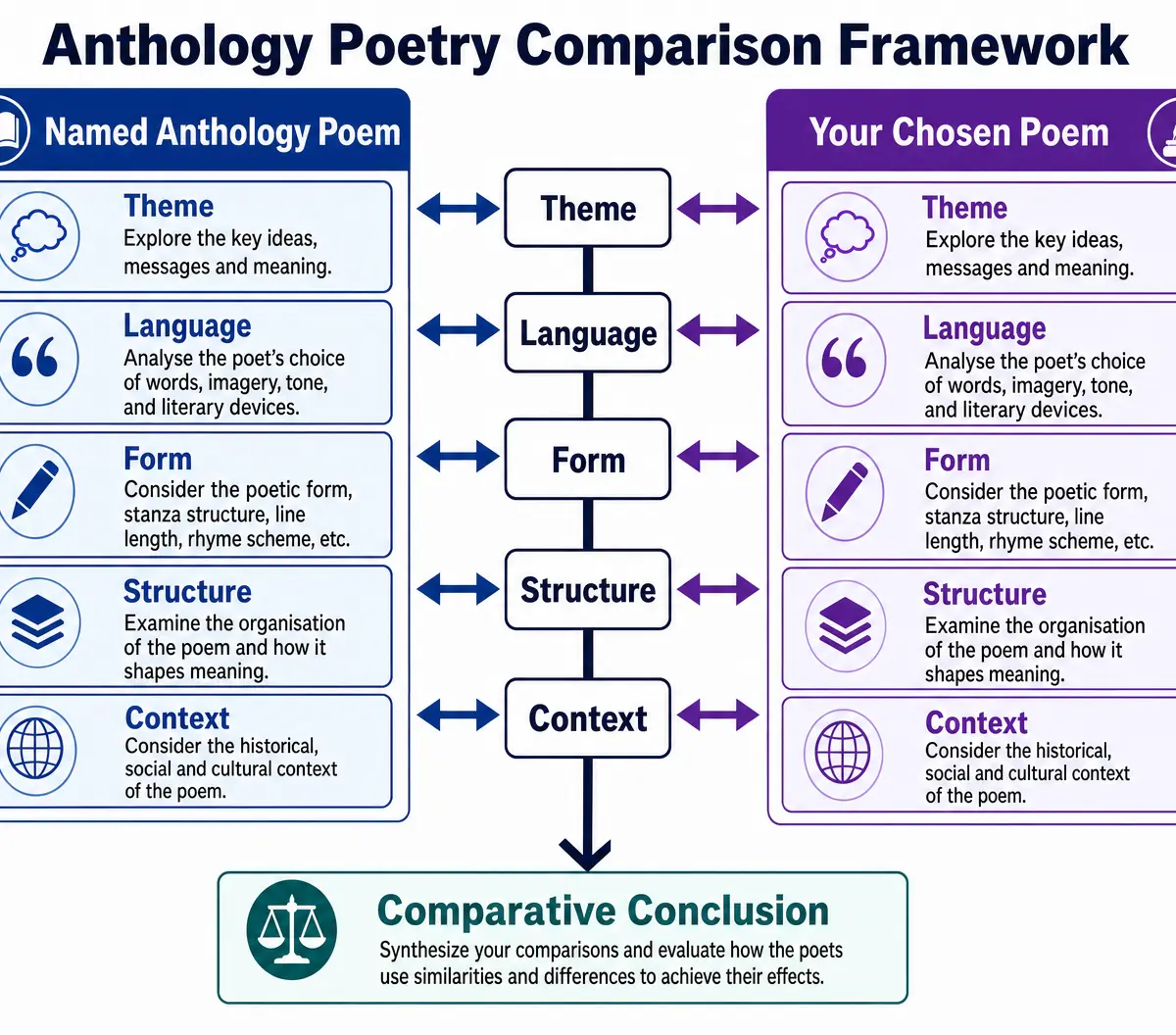
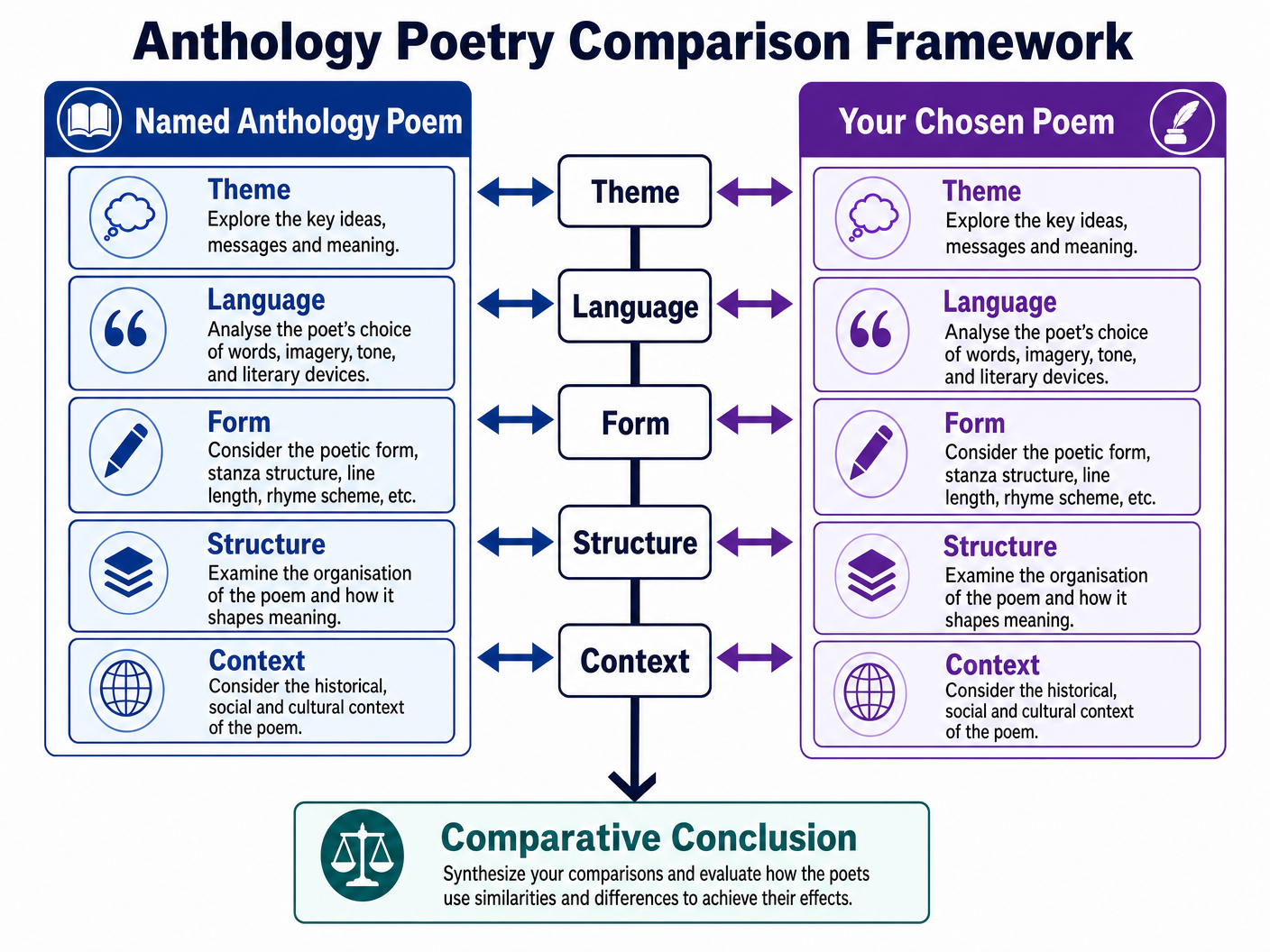
- Anthology Comparison: Compare a named poem from your studied collection with one other poem of your choice from the same collection.
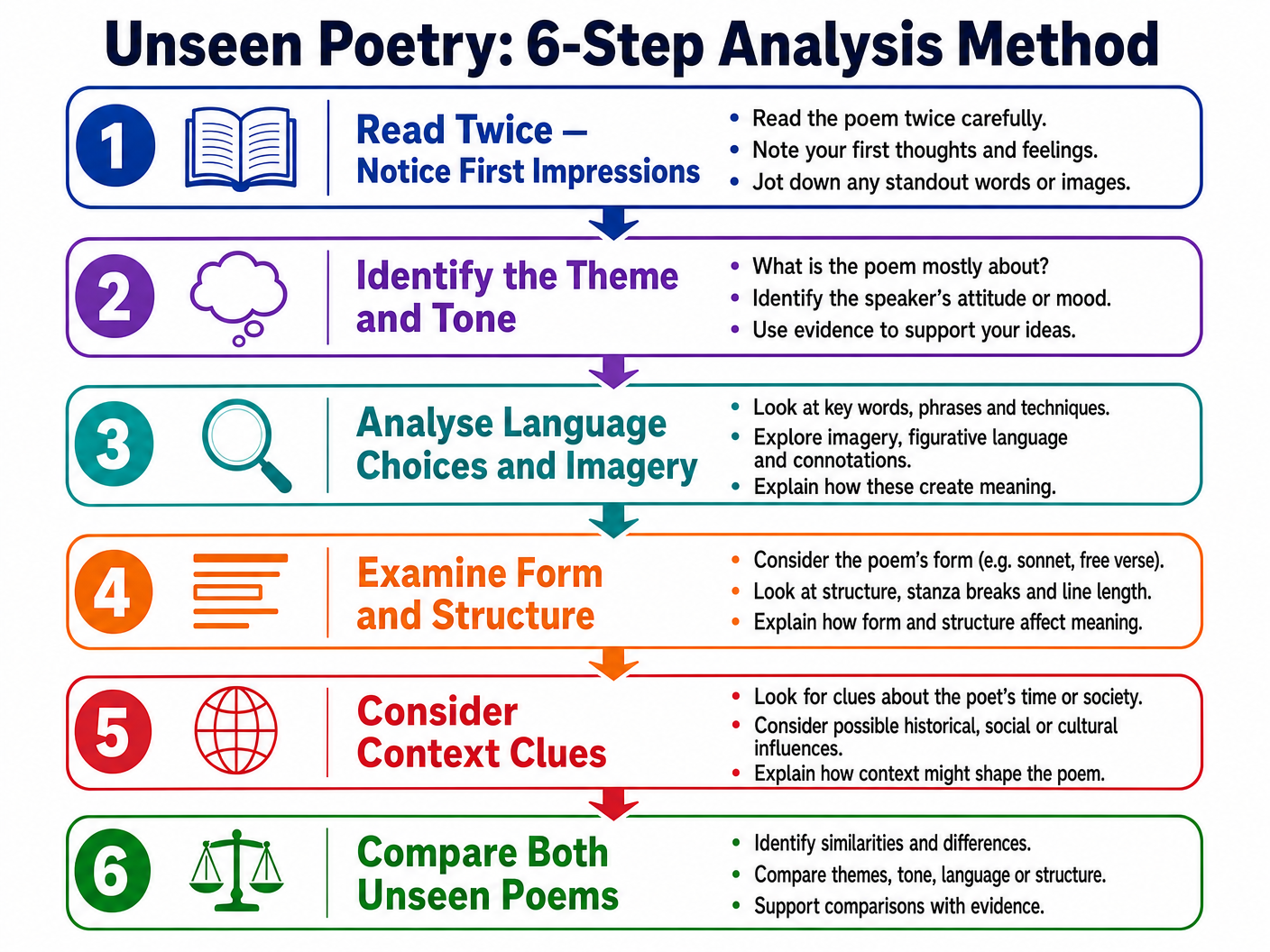
- Unseen Poetry Comparison: Compare two unseen contemporary poems linked by a shared theme.
Both tasks require you to explore writer's methods and compare effectively.
Core Themes Across Collections
While you will only study one collection in depth, understanding the core themes helps with both the anthology and unseen tasks.
Theme 1: Human Connection (Relationships & Belonging)
Many poems explore the complexities of human bonds—whether familial, romantic, or societal. Poets often use structural shifts to represent changing relationships.
Key Approaches:
- Look for volta (turning points) that signal a shift in feelings.
- Analyse the use of pronouns (e.g., 'we' vs 'I' and 'you') to establish distance or intimacy.
Theme 2: Power and Struggle (Conflict)
Conflict poems deal with internal psychological battles as well as physical warfare. Examiners reward candidates who recognise the difference between the reality of conflict and the propaganda surrounding it.
Key Approaches:
- Identify sensory imagery that brings the reality of conflict to life.
- Consider how the poet's context (e.g., First World War vs contemporary conflict) shapes their perspective.
Theme 3: Memory and Identity (Time and Place)
These poems explore how our past and our environment shape who we are. Time is often personified as a destructive or healing force.
Key Approaches:
- Examine the use of tense—how does the poem move between past and present?
- Look for motifs of decay or preservation.
Writer's Methods: Language, Form, and Structure (AO2)
Examiners want to see you analyse how meaning is created, not just what the poem means.
Language Analysis
Don't just identify techniques; explain their effect.
- Weak: "The poet uses a metaphor."
- Strong: "The poet's use of the metaphor 'shattered visage' conveys the complete destruction of power and the inevitable decay of human arrogance."
Form and Structure
Many candidates ignore form and structure. To reach the top bands, you must discuss them.
- Enjambment: Does the line flow into the next to suggest lack of control, continuous movement, or overwhelming emotion?
- Caesura: Does punctuation in the middle of a line create a jarring pause, reflecting a fractured state of mind?
- Stanza Length: Do regular stanzas suggest control and order, while irregular stanzas suggest chaos?
Approaching Unseen Poetry
The unseen poetry task tests your skills, not your knowledge.
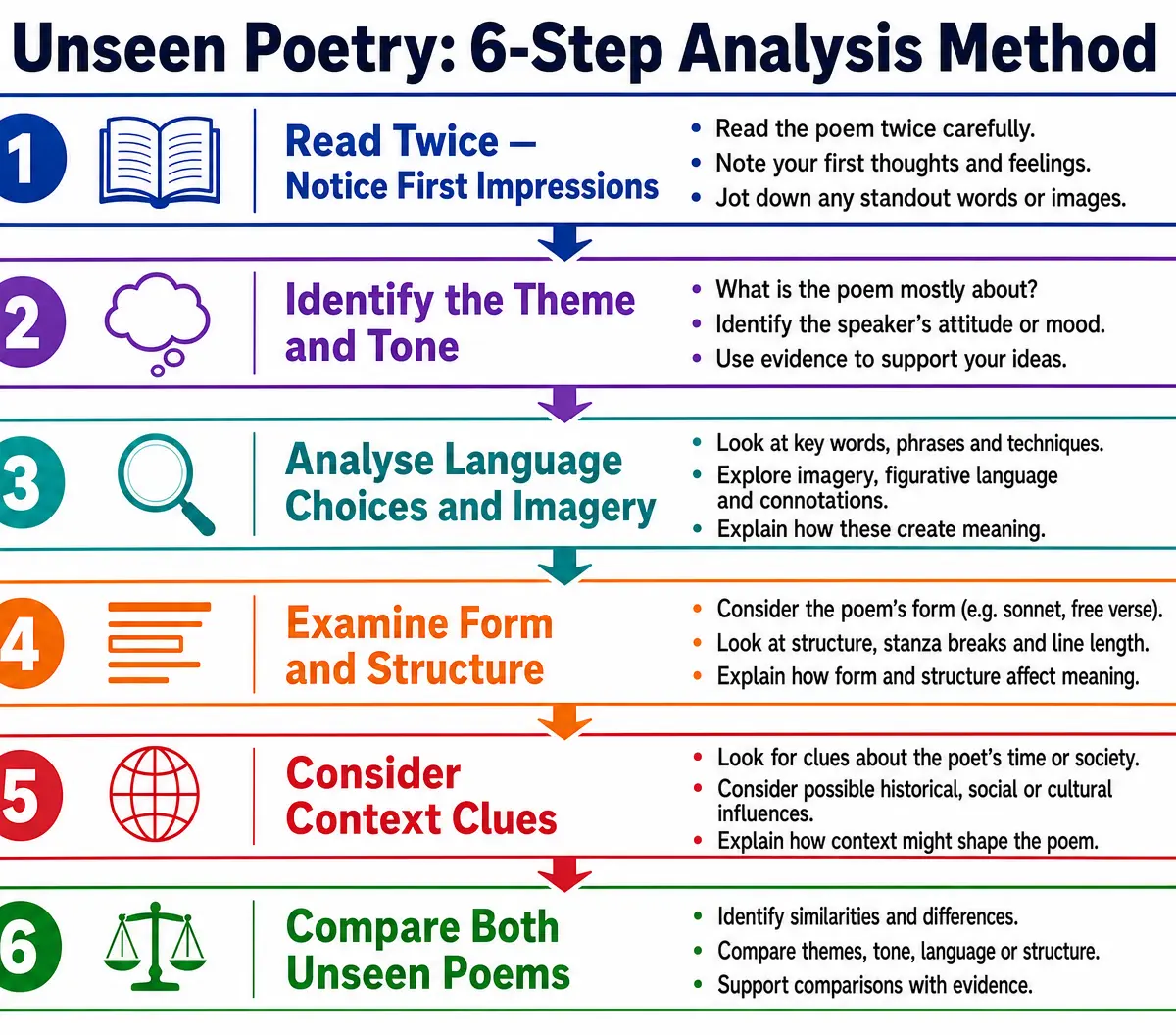
- Read Twice: The first time for meaning, the second time for methods.
- Identify the Tone: Is the speaker angry, nostalgic, melancholic, or joyful?
- Look for Shifts: Where does the poem change direction (volta)?
- Compare from the Start: Use comparative connectives in your very first paragraph.
Visual Resources
3 diagrams and illustrations
Interactive Diagrams
1 interactive diagram to visualise key concepts
Conceptual Flow Outline
The Ideal Poetry Comparison Essay Structure
Worked Examples
2 worked examples — open one to explore the question and available guidance.
Practice Questions
Test your understanding — click to reveal model answers
Compare how poets present the effects of time passing in your named poem and one other poem from your chosen collection. (30 marks)
Hint: Consider how time is personified. Is it a healer or a destroyer? Look closely at the use of tense and structural shifts.
Compare how the writers present the experience of loss in 'Unseen Poem A' and 'Unseen Poem B'. (30 marks)
Hint: Look for the volta in each poem—how does the speaker's attitude towards their loss change as the poem progresses?